
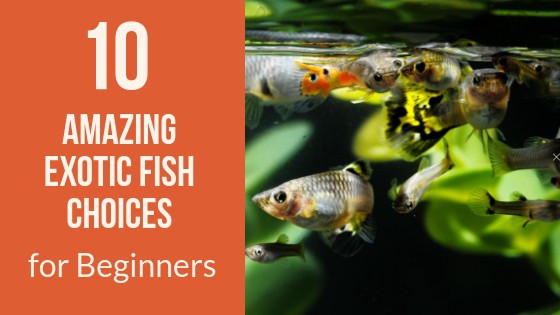
Not every tropical fish needs to be rare to feel exotic in your living room. Species like kuhli loaches, harlequin rasboras, and otocinclus catfish have distinctive looks and behaviors that stand out in any tank — while still being forgiving enough for someone just getting started. This list mixes those eye-catching picks with reliable community staples like corydoras catfish and guppies, so you get a freshwater aquarium that looks interesting without being hard to keep.
Before You Choose
Start with smaller, non-aggressive species that school together. Schooling fish present fewer challenges and let you build experience before adding more demanding species. If you’re setting up your first freshwater tank, get the aquarium cycled and stable before introducing fish.
Key Selection Criteria
Before choosing exotic fish, consider these guidelines:
Selection Guidelines
- Select species resilient to occasional water quality dips
- Prioritize fish requiring moderate rather than constant attention
- Choose compatible species that coexist peacefully
- Account for adult size when planning tank capacity — not just juvenile size
- Plan your fishscape: tank size, fish selection, landscaping, and maintenance schedule
The 10 Best Exotic Fish for Beginners
1. Kuhli Loaches
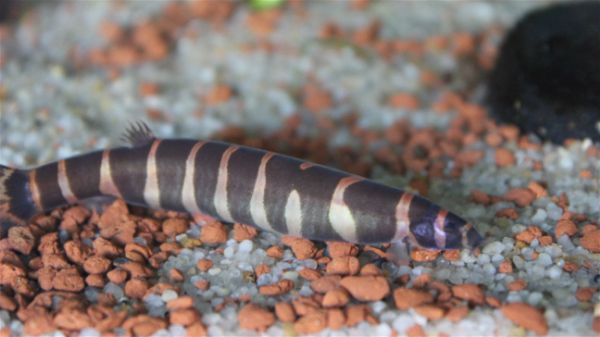
Kuhli loaches are eel-like bottom feeders that become more active and social when kept in groups of 5-6.
Kuhli loaches are peaceful, eel-like bottom feeders with distinctive banding patterns and a potential lifespan exceeding 10 years. Kuhli loaches display engaging behavior, especially during feeding, and become noticeably more active and social when kept in groups.
| Parameter | Requirement |
|---|---|
| Tank Size | 10+ gallons |
| Temperature | 75-86°F |
| pH | 5.5-6.5 |
| Water Hardness | 0-5 dGH (soft water) |
| Lifespan | 10+ years |
Scaleless Fish
Kuhli loaches have no scales, making them sensitive to medications, chemicals, and physical injuries. They are also more reactive to weather and temperature changes than scaled species. Handle tank treatments with extra caution.
Care Tips: Keep kuhli loaches in schools of 5-6 for more active daytime behavior. Provide moderate lighting and plenty of hiding spots with decorations and plants. Well-aerated, clean water with frequent bottom cleaning keeps them healthy. Feed a varied diet of high-quality sinking foods.
Compatible With: Harlequin rasboras, otocinclus catfish, other peaceful species
2. Harlequin Rasboras
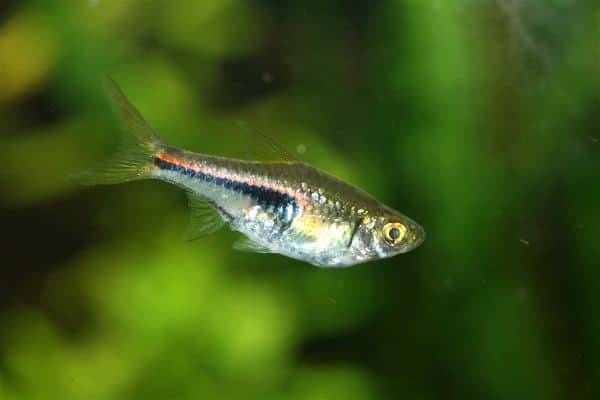
Harlequin rasboras thrive in heavily planted tanks — dark substrate brings out their metallic orange coloration.
Harlequin rasboras are small, docile schooling fish with a distinctive black triangle marking and metallic orange body. Their peaceful nature makes them excellent community tank residents that rarely cause problems.
| Parameter | Requirement |
|---|---|
| Tank Size | 10+ gallons |
| Temperature | 73-82°F |
| pH | 6.0-7.5 |
| Water Hardness | Up to 12 dGH |
Care Tips: Keep 8-10 harlequin rasboras together for the best schooling behavior. Harlequin rasboras love heavily planted tanks with large rocks that mimic their natural Southeast Asian habitat. Position decorations toward the sides to leave open swimming space in the center. Dark sand or gravel substrate enhances their metallic orange coloration. Harlequin rasboras accept a varied diet including flakes, dried, frozen, and live foods — use small grain sizes.
Compatible With: Corydoras catfish, neon tetras, kuhli loaches — keep away from large or predatory fish
3. Otocinclus Catfish
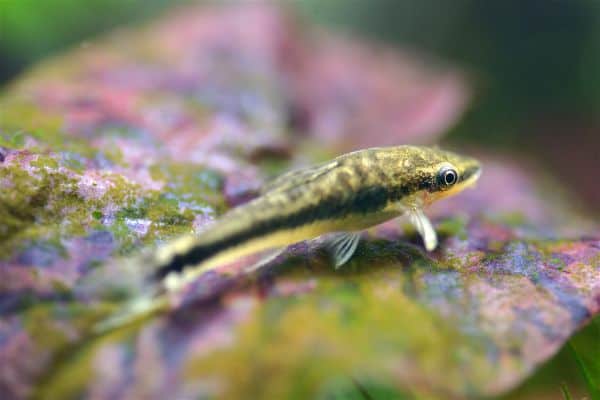
Otocinclus catfish are tireless algae eaters — a great alternative to larger plecos in smaller tanks.
Otocinclus catfish (otto cats) are excellent algae eaters native to the Amazon basin streams of Peru, Colombia, and Ecuador. Very small, very fast, and very peaceful, otocinclus catfish make a superior alternative to larger plecos in tanks under 25 gallons.
| Parameter | Requirement |
|---|---|
| Tank Size | 10+ gallons |
| Temperature | 72-79°F |
| pH | 6.8-7.5 |
| Ammonia/Nitrite | 0 ppm required |
Care Tips: Otocinclus catfish require very low nitrate levels and an established, mature, heavily planted tank with soft filmy algae to graze on. Otocinclus catfish are extremely sensitive to water parameter shifts — sudden changes in temperature or chemistry can be fatal. Regular partial water changes keep conditions stable. Otocinclus catfish have a shorter lifespan relative to other species on this list, so pair otocinclus only with other peaceful fish.
Compatible With: Corydoras catfish, cherry shrimp, ghost shrimp, snails
4. Cherry Barbs
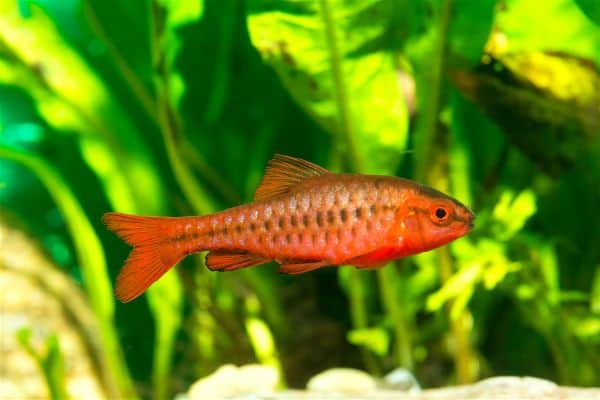
Male cherry barbs display striking red coloration, especially when kept in planted tanks with hiding spots.
Cherry barbs are vibrant red tropical fish native to Sri Lanka’s Kelani River. Males display brighter, deeper red coloration than females, especially during breeding and in well-planted tanks with decorations.
| Parameter | Requirement |
|---|---|
| Tank Size | 13-25 gallons or larger |
| Temperature | 73-81°F |
| pH | 6.0-8.0 |
Care Tips: Keep cherry barbs in schools of 6 or more. Cherry barbs thrive in planted tanks with hiding spots and open swimming areas. Good filtration with slow water flow suits them best. Use small-grain food — cherry barbs have small mouths. Adding plants and decorations enhances male coloration noticeably.
Fin Nippers
Cherry barbs can nip at slow-moving fish with flowing fins like bettas. Avoid housing them with betta fish or other long-finned species.
5. Bristlenose Plecos
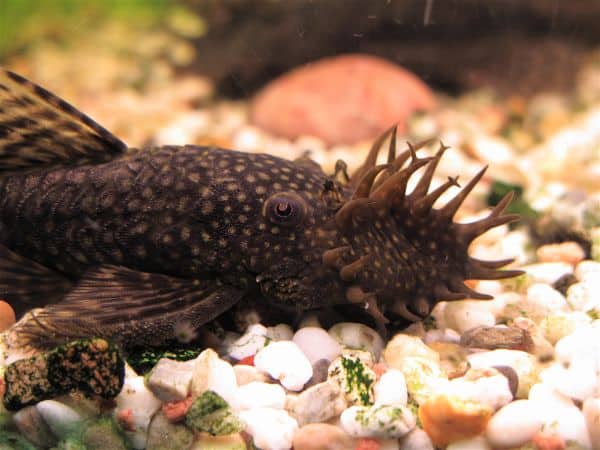
Male bristlenose plecos develop unique tentacle-like branches on their heads at maturity — they're skilled tank cleaners that stay manageable in size.
Bristlenose plecos (Bristlenose Ancistrus) are medium-sized algae cleaners that stay manageable unlike common plecos, which can grow over a foot long. Available in brown, black, grey, and olive, bristlenose plecos feature bony body plates and distinctive tentacle-like head branches on mature males. Mostly nocturnal, bristlenose plecos hold their own against semi-aggressive or curious tankmates.
| Parameter | Requirement |
|---|---|
| Tank Size | 25+ gallons |
| Temperature | 60-80°F |
| pH | 6.5-7.5 |
| Water Hardness | 20-25 |
Care Tips: A strong filtration system — such as a canister filter combined with an under-gravel system — keeps water quality suitable for bristlenose plecos. Bristlenose plecos are sensitive to high ammonia and nitrate levels. Diet should be approximately 85% plant matter and 15% protein — supplement algae cleaning with vegetarian tablets or blanched vegetables once or twice daily. Provide plenty of hiding spots with plants, driftwood, and caves.
Compatible With: Fast mid-layer swimmers — may nibble scaleless fish if underfed
6. Corydoras Catfish
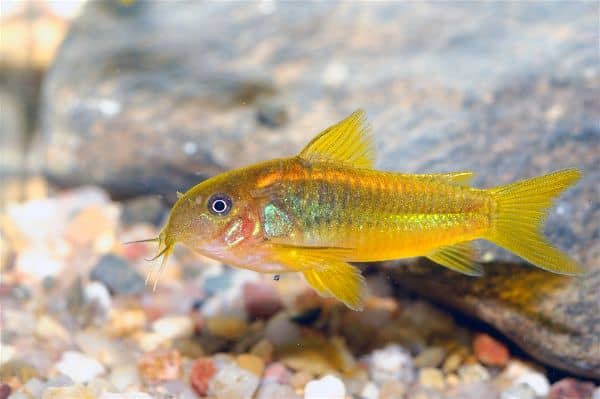
Corydoras are sociable bottom feeders with distinctive whisker-like barbels — keep them in groups of six or more.
Corydoras catfish (cories) are small, sociable bottom feeders that bring activity to the lower regions of your tank. Often called catfish because of their whisker-like barbels, corydoras actively forage along the substrate and serve as excellent tank cleaners.
| Parameter | Requirement |
|---|---|
| Tank Size | Minimum 30 gallons |
| Temperature | 74-80°F |
| pH | 7.0-8.0 |
| Alkalinity | 3-10 dKH |
Care Tips: Corydoras catfish are schooling fish — keep at least six together. Corydoras appreciate sandy or smooth gravel substrate that won’t damage their sensitive barbels. Perform 10% water changes bi-weekly or 25% monthly. Avoid placing corydoras catfish in newly set up or neglected aquariums — they need stable, established conditions.
Compatible With: Swordtails, neon tetras, harlequin rasboras, guppies
7. Swordtails
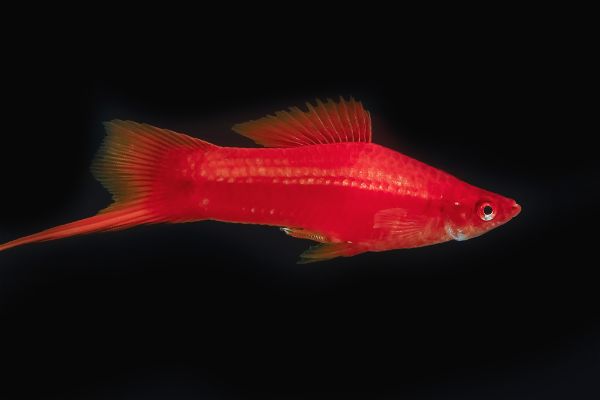
Male swordtails sport distinctive elongated tails — originally green with red stripes, they now come in many bred color varieties.
Swordtails are petite fish reaching a maximum of about 2 inches, with males sporting distinctive sword-like tail extensions. Originally green with two red stripes, swordtails are now bred in many color varieties that add visual interest to community tanks.
| Parameter | Requirement |
|---|---|
| Tank Size | 15 gallons minimum (30+ with other species) |
| Temperature | 65-82°F |
| pH | 7.0-8.4 |
| Water Hardness | 12-30 dGH |
Care Tips: Male swordtails may harass females — maintain at least 2 females per male. Swordtails are skilled jumpers, so keep your tank covered securely. Provide swordtails a balanced diet of protein and plant matter. Reducing filter flow can help swordtails feel more comfortable in smaller tanks.
Compatible With: Corydoras catfish, other peaceful community fish
8. Zebra Danios
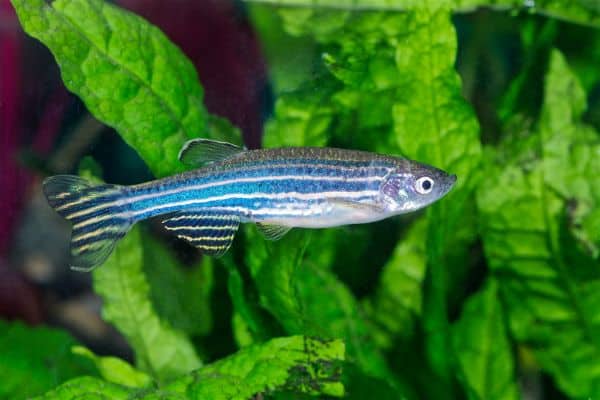
Zebra danios are among the hardiest freshwater fish available — ideal for beginners still learning water chemistry.
Zebra danios are one of the most popular beginner exotic fish for good reason: zebra danios are extremely hardy and adaptable. Their high activity level and distinctive horizontal stripes add constant energy to any aquarium, and zebra danios can live up to 5 years with proper care.
| Parameter | Requirement |
|---|---|
| Tank Size | 10+ gallons |
| Temperature | 65-77°F |
| pH | 6.5-7.2 |
| Water Hardness | Medium-hard preferred |
| Lifespan | Up to 5 years |
Care Tips: Keep zebra danios in schools of at least 5. Zebra danios prefer tanks with some water current — a hang-on-back filter works well for this. Zebra danios accept a wide diet including small insects, worms, algae, crustaceans, and quality flake foods, and reproduce easily in home aquariums.
Compatible With: Cherry barbs, corydoras catfish, swordtails
9. Neon Tetras
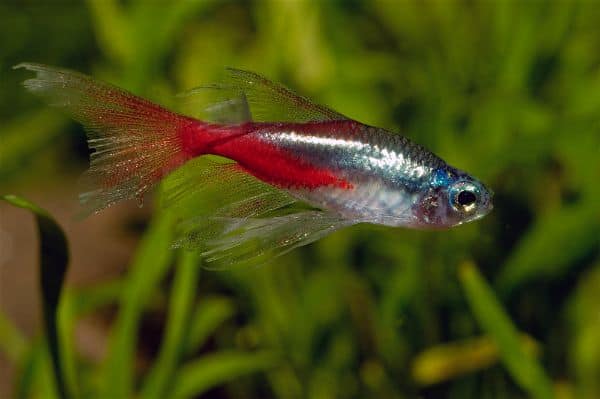
Neon tetras are tiny but striking — their iridescent blue and red stripes create a dazzling display in planted tanks.
Neon tetras are tiny, lively fish beloved for their vibrant blue and red coloring. With a lifespan of approximately 8 years, they provide long-term enjoyment in a well-maintained community tank.
| Parameter | Requirement |
|---|---|
| Tank Size | 20 gallons for a school of 15 |
| Temperature | 70-81°F |
| pH | 6.0-7.0 |
| Water Hardness | Less than 10 dGH (soft water) |
| Lifespan | Approximately 8 years |
Care Tips: Keep neon tetras in schools of 6 or more — neon tetras feel insecure in smaller groups and may hide or lose color. Neon tetras are sensitive to sudden water condition changes and require established, mature tanks — never place neon tetras in newly cycled aquariums. Provide subdued lighting (2 watts per gallon) and abundant hiding places among plants and decorations. Limit water changes to 25% per week maximum, and avoid housing neon tetras with larger predatory species.
Compatible With: Corydoras catfish, cherry barbs, harlequin rasboras
10. Guppies
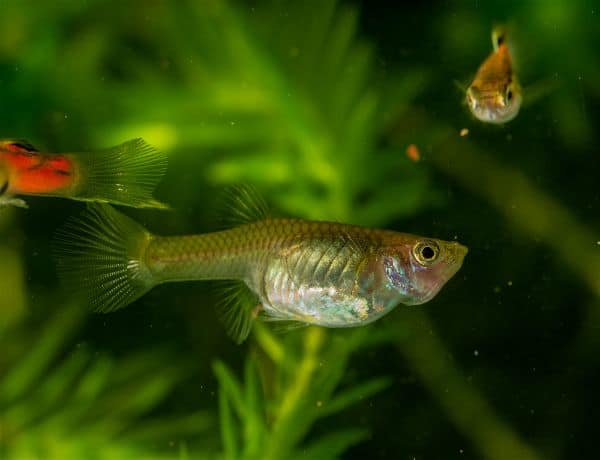
With over 300 varieties available, guppies offer endless color combinations for beginner tanks.
Guppies are vibrant, energetic tropical fish with over 300 varieties available. Native to the Amazon basin, Trinidad and Tobago, Barbados, Guyana, Brazil, and Venezuela, guppies adapt to a wide range of water conditions — making guppies one of the most forgiving species for new fishkeepers.
| Parameter | Requirement |
|---|---|
| Tank Size | Minimum 4 gallons (1 gallon per guppy) |
| Temperature | 50-84°F (minimize fluctuations) |
| pH | Around 7.0 (neutral) |
| Water Hardness | 8-12 dGH |
Care Tips: Maintain a 1 male to 2 females ratio to reduce stress on females. All-male tanks are easier to manage if you want to avoid breeding. Perform 50% weekly water changes and offer a diverse diet with guppy flakes, small pellets, and occasional live or freeze-dried foods. Avoid overfeeding — guppies eat eagerly but excess food fouls the water.
Compatible With: Corydoras catfish, otocinclus catfish, harlequin rasboras, swordtails, bristlenose plecos
Compatibility Guide
Choosing the right tankmates is just as important as choosing the right fish. Here are proven combinations that work well together:
Compatible Combinations
- Corydoras catfish work with swordtails, neon tetras, and harlequin rasboras
- Neon tetras pair well with corydoras catfish and cherry barbs
- Harlequin rasboras complement corydoras catfish and neon tetras
- Otocinclus catfish do well with corydoras catfish, shrimp, and snails
- Kuhli loaches are compatible with harlequin rasboras and otocinclus catfish
- Guppies work with corydoras catfish, otocinclus catfish, harlequin rasboras, swordtails, and bristlenose plecos
When in doubt, choose species that occupy different levels of the tank — bottom feeders like corydoras catfish with mid-level schoolers like neon tetras and surface swimmers like guppies. This reduces competition for territory and food.
Getting Started
If you’re new to fishkeeping, setting up a small freshwater tank is the best first step. A 10-gallon tank kit provides enough space for several beginner species, while a 20-gallon tank gives more flexibility for combining different fish. Invest in a reliable aquarium filter and learn how to set it up properly — stable water quality is the single most important factor in keeping exotic fish healthy.
Start with one hardy species, build your confidence, and add diversity gradually. Every experienced aquarist started exactly where you are now.
What is the easiest exotic fish for beginners?
Guppies are widely considered the easiest exotic fish for beginners. They tolerate a wide range of water parameters, eat readily available foods, display vibrant colors, and breed easily. Zebra danios are similarly hardy choices that thrive in community tanks.
How many fish should a beginner start with?
Start with 3-6 fish of the same hardy species. This allows you to learn care routines without overwhelming your new tank's biological filter. Add more fish gradually over weeks to months, monitoring water parameters between additions.
Can different exotic fish live together?
Many exotic fish can live together in community tanks, but compatibility depends on temperament, size, and water parameter requirements. Research each species before combining them. Generally, schooling fish of similar size with peaceful temperaments coexist well.
Do exotic fish need heaters?
Most tropical exotic fish require heaters to maintain stable temperatures between 72-82°F depending on species. Even fish that tolerate cooler water benefit from heaters that prevent temperature swings, which stress fish more than steady cool temperatures.
Found this helpful?
Share this guide with your fellow aquarium enthusiasts!
Written by
FTW Team
The FishTankWorld editorial team brings together experienced aquarists to help you succeed in the hobby.