
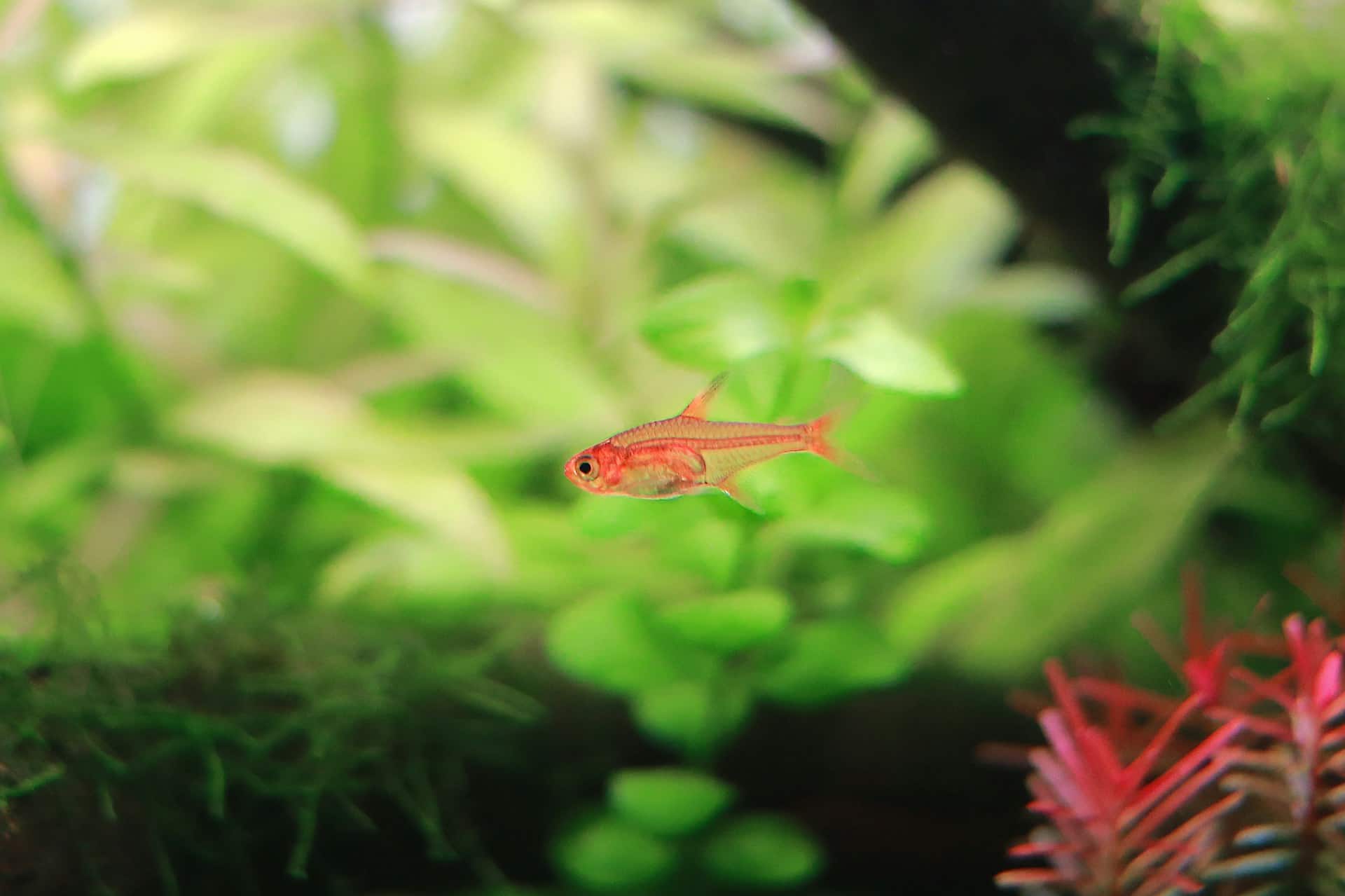
The ember tetra (Hyphessobrycon amandae) is a tiny freshwater fish that packs an outsized visual punch. At just 0.8 inches fully grown, these fiery orange schooling fish are among the smallest tetras in the aquarium hobby, and their glowing coloration has made them a favorite for planted nano tanks and shrimp-safe community setups.
Native to the Araguaia River basin in central Brazil, ember tetras were first described scientifically in 1987 and named amandae in honor of Amanda Bleher, the mother of renowned fish explorer Heiko Bleher. Despite being relatively new to the hobby compared to species like the neon tetra, ember tetras have rapidly earned a devoted following among aquarists who appreciate their peaceful temperament, hardiness, and the way a school of them lights up a planted tank like a handful of floating embers.
This guide covers everything you need to keep ember tetras healthy and vibrant: tank setup, water parameters, diet for their tiny mouths, schooling requirements, compatible tank mates, color enhancement, common diseases, and breeding basics.
Ember Tetra at a Glance
Care Requirements
Aquarium Setup
Ember tetras thrive in planted nano tanks. While they can physically fit in a 5-gallon aquarium, a 10-gallon tank is the recommended minimum because it provides more stable water conditions and enough room for a proper school of 8 to 10 fish. If you want a larger school of 15 to 20 ember tetras, which produces a genuinely stunning display, a 20-gallon tank gives them the space to shoal naturally.
Substrate
Most aquarium substrates will work, but ember tetras visibly intensify their orange pigmentation over darker backgrounds — on light-colored gravel they look washed out by comparison.
- Planted tank soil (Fluval Stratum, ADA Amazonia) — the most common choice for ember tetra tanks since most keepers run planted setups. Naturally lowers pH and softens water, which embers prefer. See our best substrate for planted tanks for a full comparison.
- Black sand — a good option if you’re keeping embers with cherry shrimp or pygmy corydoras that sift the bottom. Smooth grains and easy to clean.
- Fine dark gravel — works well for simpler setups without live plants.
Plants and Decoration
This is where ember tetras really shine. A densely planted tank with fine-leaved plants like Java moss, Cabomba, or Pogostemon stellatus mimics their natural habitat and brings out their best behavior. Ember tetras feel most secure when there are clusters of plants to retreat into, and they spend most of their time hovering in the open spaces between plant groupings.
Driftwood and botanicals like Indian almond leaves (catappa leaves) are excellent additions. They release tannins that slightly tint the water, create a natural South American biotope aesthetic, and lower the pH gently toward the soft, acidic conditions ember tetras prefer. For plant ideas, see our low-tech planted aquarium guide.
Ideal Tank Setup
- Dark substrate (black sand or dark gravel) to maximize color contrast
- Dense clusters of fine-leaved plants with open swimming areas in between
- Floating plants like Salvinia or Red Root Floaters to diffuse lighting
- Driftwood and Indian almond leaves for tannins and a natural look
- Gentle filtration — a sponge filter is ideal for these tiny fish
- A secure lid, as ember tetras can jump when startled
Lighting
Ember tetras come from shaded forest streams and prefer subdued to moderate lighting. Bright overhead lights can stress them and actually cause their colors to fade. Floating plants are the easiest way to create the dappled, diffused lighting conditions they thrive in. Under moderate lighting with a dark background, their orange coloration appears to glow — which is where their common name comes from.
Water Conditions
Ember tetras are surprisingly adaptable for such small fish. They originate from soft, acidic blackwater habitats but adjust well to a range of aquarium conditions. Stability matters more than hitting exact numbers.
Temperature and pH
Keep the water between 68 and 82°F (20 to 28°C). A comfortable target of 75 to 80°F works well for most setups. The preferred pH range is 5.5 to 7.0, with soft to moderately soft water (2 to 10 dGH). If your tap water runs slightly above neutral pH, ember tetras will likely adapt as long as conditions stay consistent.
Water Change Schedule
Perform 20% water changes weekly to keep nitrates below 20 ppm. In smaller tanks, consider twice-weekly water changes since parameters shift faster in low-volume setups. Always match the temperature of replacement water to the tank water — even a 2 to 3°F difference can stress these tiny fish.
Filtration
Ember tetras need gentle flow — they’re small fish from slow-moving water, and a strong current will exhaust them. The bigger concern with this species is filter intakes. At under an inch, ember tetras can fit through the intake grate on many hang-on-back and canister filters. This is a documented problem, not a theoretical one.
A sponge filter avoids the intake issue entirely and provides gentle biological filtration with minimal current — it’s the most common choice for ember tetra tanks. If you prefer a hang-on-back or canister, cover the intake with a pre-filter sponge. This is not optional with fish this small. See our best aquarium filter guide for options suited to nano tanks.
Diet
Ember tetras have small mouths, but they handle standard flake food fine — they nibble and break off pieces like any small fish. Pellets are where size matters more, since hard pellets that are too large just get ignored. Micro pellets or crushed pellets work best.
What to Feed
Recommended Diet
- High-quality flake food as a daily staple
- Micro pellets designed for nano fish
- Baby brine shrimp (live or frozen) — an excellent protein source they love
- Daphnia (live or frozen) — great for digestion and color enhancement
- Microworms and vinegar eels for variety and easy-to-eat live food
- Finely chopped frozen bloodworms as an occasional treat
How Often to Feed
Feed ember tetras twice per day in small amounts they can consume within 60 to 90 seconds. Their stomachs are incredibly small, roughly the size of their eye, and overfeeding is one of the most common mistakes with this species. Uneaten food decomposes rapidly in a small tank and spikes ammonia levels. If food is drifting to the bottom untouched, you are giving them too much.
Color Through Diet
A varied diet that includes live or frozen foods like brine shrimp and daphnia is one of the most effective ways to intensify ember tetra coloration. These foods contain natural carotenoid pigments that the fish metabolize into deeper orange and red tones over time. A monotonous diet of dry food alone often results in duller coloration.
Schooling and Temperament
Ember tetras are a shoaling species, which means they prefer to stay loosely grouped rather than forming the tight, synchronized schools that species like rummy-nose tetras display. They drift through the mid-water column in a relaxed cluster, occasionally splitting into smaller subgroups before regrouping.
School Size
Keep a minimum of 8 to 10 ember tetras, though 12 or more produces noticeably better results. In larger groups, ember tetras display bolder behavior, spend more time in the open, and show significantly brighter coloration. A school of 6 can survive, but the fish tend to be more skittish and fade in color compared to a larger group.
In groups of 15 to 20, ember tetras create a striking visual effect as they move through a planted tank — the loose cloud of orange against green foliage is one of the most appealing sights in the nano tank hobby.
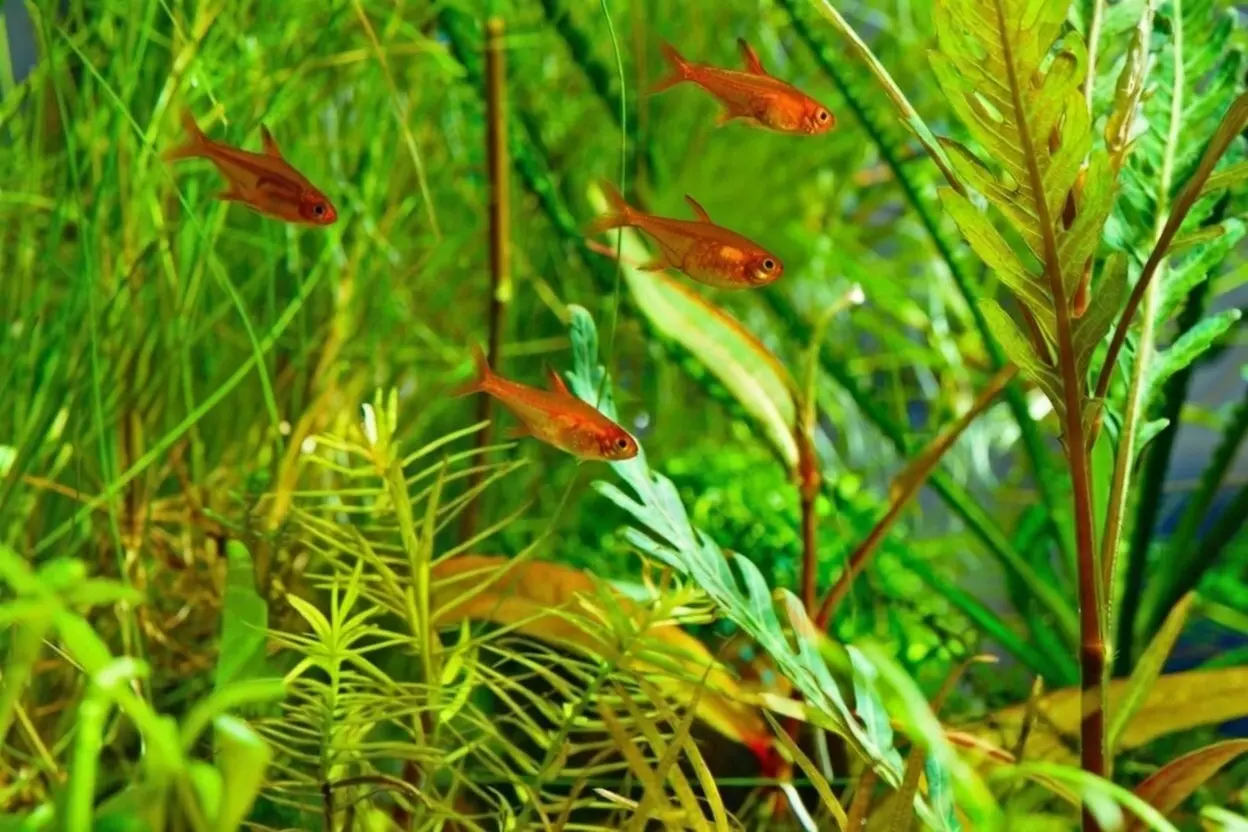
A school of ember tetras glowing against green plants — larger groups produce bolder color and more confident behavior.
Temperament
Ember tetras are extremely peaceful. They show virtually no aggression toward tank mates and are not fin nippers. Males will occasionally chase each other in brief displays of dominance or courtship, but these interactions are harmless and short-lived. They are mid-water dwellers that stay in the middle and upper portions of the water column.
Safe Tank Mates
Ember tetras make excellent community fish, but their tiny size limits which species they can safely live with. Any fish large enough to fit an ember tetra in its mouth is a potential predator. Stick with other small, peaceful species.
Compatible Species
Good Tank Mates
- Cherry shrimp — one of the best pairings in the hobby, ember tetras are too small to eat adult shrimp
- Corydoras catfish (pygmy or habrosus) — peaceful bottom-dwellers that occupy a different zone
- Other small tetras (neon tetras, green neon tetras, celestial pearl danios)
- Harlequin rasboras and chili rasboras — similar size and temperament
- Otocinclus catfish — gentle algae eaters that ignore other fish
- Nerite snails and mystery snails — completely peaceful tank cleaners
- Kuhli loaches — shy bottom-dwellers that coexist without conflict
- Honey gouramis — calm centerpiece fish that pose no threat
Ember tetras pair particularly well with cherry shrimp because their small mouth size makes them one of the safest fish options for a shrimp tank. Adult cherry shrimp are far too large for an ember tetra to eat. While the tiniest newborn shrimplets may occasionally be picked off, dense plant cover provides enough hiding spots for a shrimp colony to grow alongside ember tetras without issue. Many shrimp keepers specifically choose ember tetras for this reason.
They also work well alongside neon tetras, cardinal tetras, and rummy-nose tetras in a community setup, as long as the tank is large enough for multiple schools. Larger Congo tetras are also compatible — despite being significantly bigger, they are peaceful and won’t bother embers.
Species to Avoid
Too Small for Larger Community Fish
Ember tetras are under 1 inch long. Many popular community fish — including angelfish, larger gouramis, rainbow sharks, and even full-grown tiger barbs — can and will eat them. Do not add ember tetras to a tank with any fish that has a mouth large enough to swallow them. Even peaceful species like adult angelfish will opportunistically eat fish this small.
Incompatible Tank Mates
- Angelfish — will eat ember tetras once they reach adult size
- Cichlids of any size — too aggressive and predatory
- Tiger barbs and serpae tetras — aggressive fin nippers that will harass them
- Goldfish — need cooler water and will eat small fish as they grow
- Red-tail sharks and rainbow sharks — territorial and intimidating
- Large tetras like Buenos Aires tetras — active and big enough to bully embers
Coloring Up Ember Tetras
Ember tetras at the fish store usually look disappointing — pale, washed out, almost translucent. Bright overhead lights, bare tanks, small groups, and transport stress all work against them. Many people walk right past them because they don’t look like much.
This is normal. It’s not a sign of unhealthy fish. Ember tetras are one of the most environment-responsive species in the hobby — their coloration changes dramatically based on how they’re kept. The transformation from pale store fish to glowing orange is one of the more satisfying experiences in nano fishkeeping, and it typically takes 2 to 3 weeks once conditions are right.
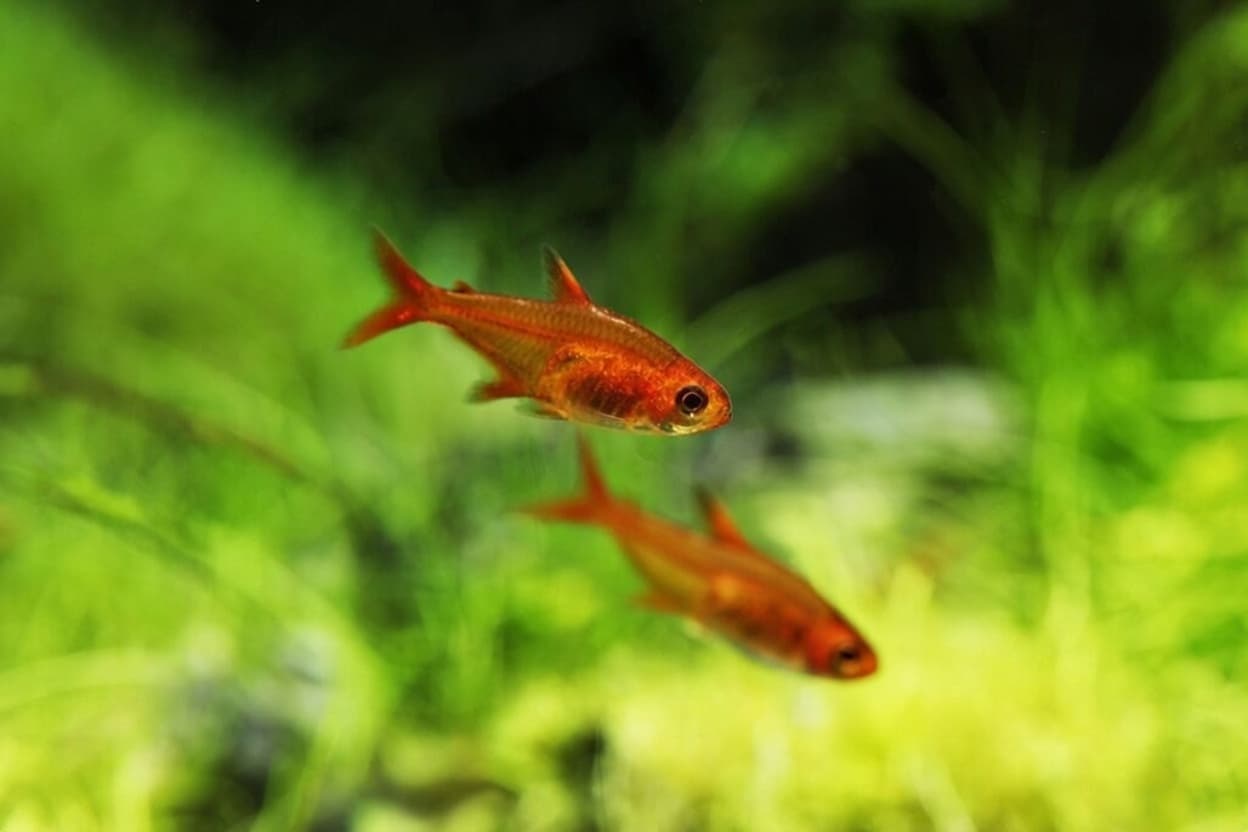
Well-conditioned ember tetras with deep orange color — a sign of good diet, dark substrate, and stable water.
What Brings Out Their Color
- Dark substrate — signals the fish to intensify their pigmentation. This is the single biggest factor. Embers on light gravel look like a different species.
- Subdued lighting — floating plants or dimmed LEDs. Bright overhead light washes them out.
- School size of 10 or more — confident fish display bolder color. Small groups hide and fade.
- Live or frozen foods — brine shrimp and daphnia contain carotenoid pigments that the fish metabolize into deeper orange and red tones. A flake-only diet produces noticeably duller fish.
- Clean water — stress from poor conditions is one of the fastest ways to kill their color.
If They’re Still Pale After a Month
If your ember tetras have been in the tank for four weeks and still look washed out, something in the environment isn’t right. Check substrate color, lighting intensity, school size, diet variety, and water quality — usually it’s one or more of these. Illness is also possible but less likely if they’re eating and active.
Health
Ember tetras are hardy fish that rarely develop problems in a stable, well-maintained aquarium. However, their tiny size means that when issues do arise, they can escalate quickly. Prevention through good water quality and proper diet is always the best approach.
Ich (White Spot Disease)
Ich is a common parasitic infection that presents as small white dots on the body and fins. Ember tetras are susceptible to ich, especially after temperature swings or stressful events like transport or introduction to a new tank. Treatment involves gradually raising the water temperature to 82°F over 48 hours while using an ich medication. Remove activated carbon from the filter during treatment. Reduce medication dosage by 25 to 50% compared to the standard recommendation, as these tiny fish can be sensitive to full-strength treatments.
Fin Rot
Fin rot shows as frayed, ragged, or receding fin edges and is almost always linked to poor water quality. Improving tank maintenance with more frequent water changes often resolves mild cases without medication. For persistent fin rot, a broad-spectrum antibacterial treatment may be necessary.
Internal Parasites
Ember tetras occasionally arrive from stores with internal parasites, which can cause weight loss, stringy white feces, and lethargy. Quarantining new fish for 2 to 3 weeks before adding them to your main tank is the most effective prevention. If parasites are suspected, consult with an aquatic veterinarian or experienced fish keeper about appropriate anti-parasitic treatments.
Quarantine New Fish
Always quarantine new ember tetras in a separate tank for 2 to 3 weeks before adding them to your display aquarium. This allows you to observe them for signs of disease without risking your established fish. A simple 5-gallon tank with a sponge filter and a few plants works perfectly as a quarantine setup.
Frequently Asked Questions
How many ember tetras should I keep together?
Keep at least 8 to 10 ember tetras together, though 12 or more is better. Larger groups produce more confident behavior, bolder coloration, and more natural loose-schooling movement. A school of 6 can work in a pinch, but ember tetras in small groups tend to hide more and show washed-out colors.
Can ember tetras live in a 5-gallon tank?
A 5-gallon tank can technically house a small group of ember tetras, but a 10-gallon tank is a much better starting point. In a 5-gallon, water quality fluctuates quickly, and there is limited room for a proper school size of 8 or more. If you do use a 5 gallon, keep the group small (6 maximum) and perform frequent water changes.
Are ember tetras safe with cherry shrimp?
Yes, ember tetras are one of the best fish to keep with cherry shrimp. At under 1 inch, their mouths are too small to eat adult cherry shrimp. They may occasionally pick off very small newborn shrimplets, but dense plant cover gives baby shrimp enough hiding spots for the colony to thrive. Many shrimp keepers specifically choose ember tetras as tank mates for this reason.
Why are my ember tetras losing their color?
The most common reasons for color loss are stress, poor water quality, inadequate diet, and wrong lighting conditions. Ember tetras fade when kept in too-small groups, in tanks with light-colored substrate, under overly bright lighting, or when they are not receiving color-enhancing foods. Check your water parameters, increase the school size if below 8, switch to a dark substrate, and feed live or frozen foods like daphnia and brine shrimp.
Do ember tetras need a heater?
Yes. Ember tetras are tropical fish that need water temperatures between 68 and 82 degrees Fahrenheit, with 75 to 80 degrees being a comfortable target. Most homes cannot maintain this range consistently without a heater. An adjustable aquarium heater set to 76 to 78 degrees Fahrenheit is recommended, along with a separate thermometer to verify accuracy.
Can ember tetras live with bettas?
Ember tetras can coexist with bettas in planted tanks of 15 gallons or larger. Their small size and peaceful nature mean they rarely provoke betta aggression, and they occupy the mid-water column while bettas prefer the surface. However, individual betta temperament varies significantly. Some bettas tolerate tank mates while others will chase anything that moves. Always have a backup plan if the pairing does not work.
How long do ember tetras live?
Ember tetras typically live 2 to 4 years in a well-maintained aquarium. Lifespan depends heavily on water quality, diet variety, stress levels, and whether the fish were healthy when purchased. Ember tetras kept in densely planted tanks with stable conditions tend to live longer than those in bare or poorly maintained setups.
What do ember tetras eat?
Ember tetras eat a variety of small foods. Their tiny mouths require micro-sized portions: crushed flake food, micro pellets, baby brine shrimp, daphnia, microworms, and finely chopped frozen foods. Feed small amounts twice a day. A varied diet that includes live or frozen foods alongside a quality staple flake or pellet produces the best coloration and overall health.
Found this helpful?
Share this guide with your fellow aquarium enthusiasts!

Written by
Jonathan Jenkins
I've been keeping fish for over 15 years — everything from planted freshwater tanks to saltwater reefs. I currently have a 30 gallon overstocked guppy breeding tank, 40 gallon planted self-cleaning aquarium, 200 gallon reef tank, and 55 gallon frag tank. I joined Fish Tank World to continue learning while sharing what I've learned along the way.