
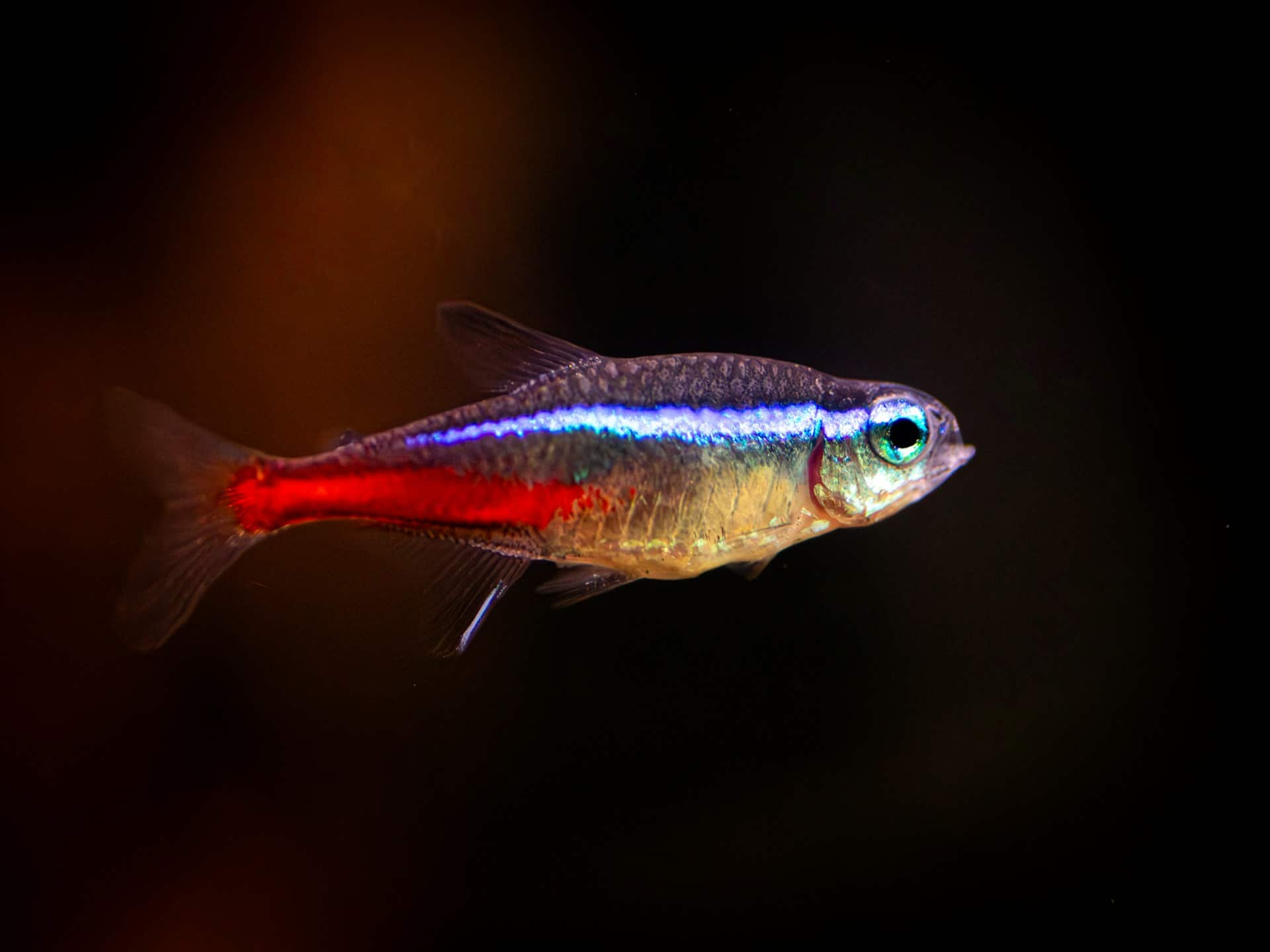
The neon tetra (Paracheirodon innesi) is one of the most popular freshwater aquarium fish in the world. Native to the blackwater streams of the Amazon basin in South America, these small schooling fish are recognized instantly by their iridescent blue stripe and vivid red tail. They stay small at just 1.5 inches, produce a low bioload, and coexist peacefully with a wide range of tank mates.
This guide covers everything you need to keep neon tetras healthy: compatible tank mates, color loss troubleshooting, common diseases, schooling behavior, tank setup, water parameters, and diet.
Neon Tetra or Cardinal Tetra?
Neon tetras and cardinal tetras look almost identical at first glance. The key difference is the red stripe — on neon tetras it covers only the back half of the body, while on cardinals it runs the full length from eye to tail. Cardinals also grow slightly larger and prefer warmer, softer water. See our cardinal tetra vs neon tetra comparison for a full side-by-side breakdown.
Neon Tetra at a Glance
Neon Tetra
Paracheirodon innesi
| Parameter | Value |
|---|---|
| Tank Size | 10+ gallons |
| Temperature | 68-82°F (20-28°C) |
| pH Range | 6.0-7.5 |
| Lifespan | 5-8 years |
| Adult Size | 1.5 inches |
| Diet | Omnivore |
| Difficulty | Beginner |
Tank Mates
Neon tetras are peaceful, non-territorial fish that do well in community tanks — as long as their tank mates share similar temperament and size. The key rule: anything large enough to fit a neon tetra in its mouth will eventually eat one.
Compatible Species
Good Tank Mates
- Corydoras catfish — peaceful bottom-dwellers that occupy a different zone
- Harlequin rasboras — similar size, temperament, and water requirements
- Other small tetras (ember tetras, cardinal tetras, rummy-nose tetras)
- Otocinclus catfish — gentle algae eaters that ignore other fish
- Cherry shrimp — safe with neon tetras, though very small shrimplets may be eaten
- Nerite snails and mystery snails — completely peaceful and useful algae cleaners
- Kuhli loaches — nocturnal bottom-dwellers that coexist without conflict
- Small peaceful gouramis (honey gouramis, sparkling gouramis)
Neon tetras can sometimes work as betta tank mates in tanks of 15 gallons or larger. Their speed helps them avoid betta aggression, but success depends entirely on the individual betta’s temperament. Cherry shrimp also make excellent companions, adding bottom-level activity and color without competing for food or space. In larger community tanks, Congo tetras make a striking addition — their iridescent shimmer complements the neon’s blue and red stripes, and they are peaceful despite their bigger size.
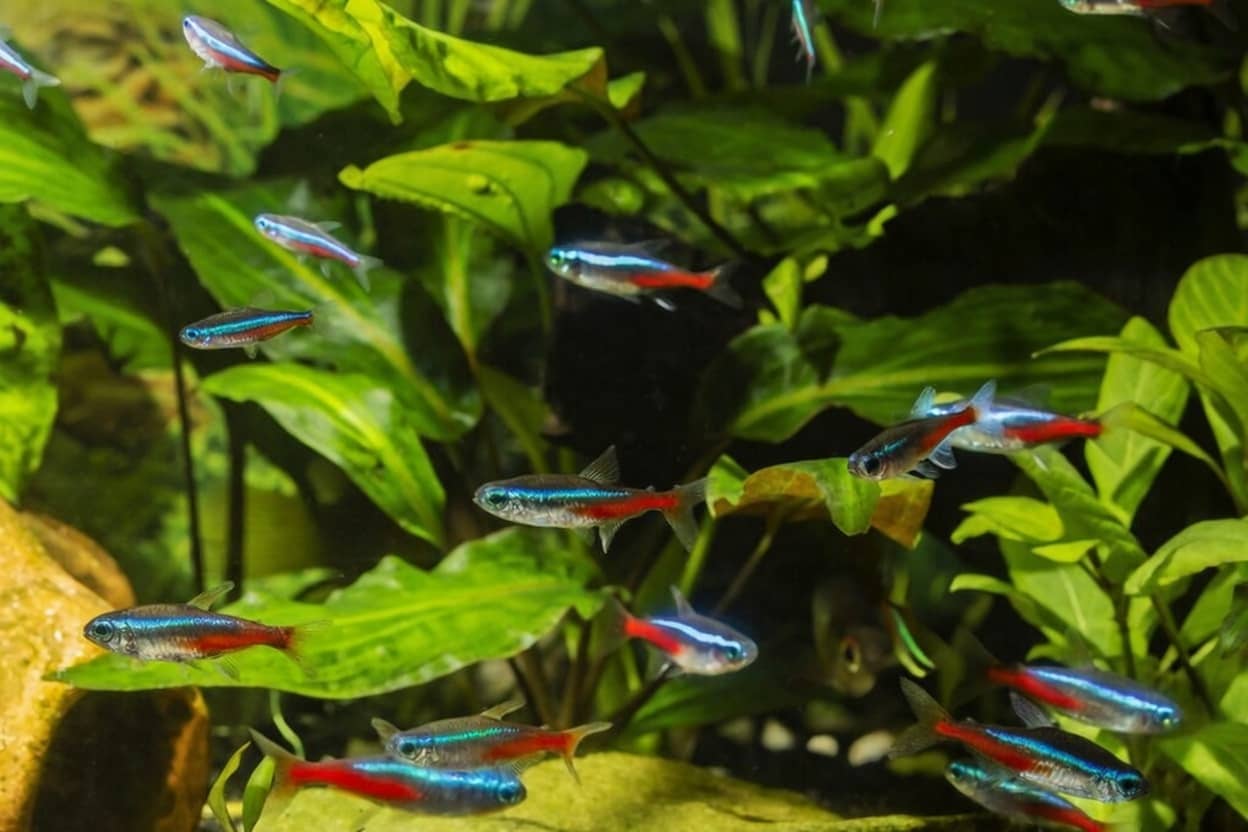
Neon tetras are peaceful community fish — their small size and calm temperament make them compatible with a wide range of tank mates.
Species to Avoid
Incompatible Tank Mates
- Cichlids (angelfish, oscars, Jack Dempseys) — will eat neon tetras
- Large barbs (tiger barbs, tinfoil barbs) — aggressive fin nippers
- Goldfish — require cooler water and will eat small tetras as they grow
- Chinese algae eaters — become aggressive and territorial with age
- Red-tail sharks and rainbow sharks — territorial and intimidating
Angelfish Warning
Despite being sold alongside neon tetras in many pet stores, angelfish are natural predators of small tetras. Juvenile angelfish may coexist with neon tetras temporarily, but adult angelfish will eat them once they grow large enough. This is one of the most common tank mate mistakes in the hobby.
Why Is My Neon Tetra Losing Color?
If it happens when the lights come on, it’s normal. Neon tetras fade their coloration while resting as a natural defense — it makes them less visible to predators in the dark. Full color returns within minutes of the lights turning back on.
If colors stay faded during the day, something else is going on:
- Water quality — Ammonia or nitrite above zero, or a sudden pH swing. Test your water first.
- Stress — School too small (under 6), aggressive tank mates, or lighting too bright.
- Temperature — Too cold slows metabolism and dulls coloration. Check your heater is holding 73-77°F.
- Diet — A dry-food-only diet dulls coloration over time. Add frozen brine shrimp or daphnia for natural pigments.
- Neon tetra disease — Fading color that progresses to white patches, especially along the spine. No cure — remove affected fish immediately. See the health section below.
The quick rule: pale at lights-on is normal. Pale during the day with changes in behavior means investigate.
Common Health Issues
Neon tetras are generally hardy once established, but they are vulnerable to a few specific diseases. Most health problems trace back to poor water quality, stress, or introducing sick fish without quarantine.
Neon Tetra Disease (NTD)
Neon tetra disease is the most serious illness specific to this species. It is caused by the microsporidian parasite Pleistophora hyphessobryconis and has no known cure. The parasite enters the fish through ingestion of infected material — typically dead fish, contaminated live food, or spores in the water column.
Symptoms progress in stages:
- Restlessness and separation from the school
- Gradual fading of the blue and red coloration
- White or pale patches appearing on the body as muscle tissue is destroyed
- Difficulty swimming and maintaining balance
- Curved or bent spine in advanced cases
- Secondary infections (fin rot, bloating) as the immune system collapses
No Cure Available
There is no effective treatment for neon tetra disease. If you identify an infected fish, remove it from the tank immediately to prevent transmission. The disease spreads when healthy fish eat infected tissue. Remove dead fish promptly and never allow sick fish to remain in the main tank.
Prevention is the only defense:
- Quarantine all new fish for 2 to 3 weeks before adding them to your main tank
- Remove dead fish from the tank immediately
- Avoid feeding live Tubifex worms, which can carry the parasite
- Buy from reputable sources that quarantine their own stock
- Maintain excellent water quality to keep immune systems strong
False Neon Tetra Disease (Columnaris)
Columnaris is a bacterial infection that mimics NTD symptoms, including white patches and color fading. The key difference is that columnaris often presents with white cottony growths around the mouth or body, and it progresses faster. Unlike true NTD, columnaris can be treated with antibiotics (kanamycin or nitrofurazone) if caught early.
Ich (White Spot Disease)
Ich is a common parasitic infection recognizable by small white dots that look like grains of salt on the body and fins. Neon tetras are susceptible to ich, especially after temperature changes or stress events. Treatment involves gradually raising the water temperature to 82°F over 24 to 48 hours and using an ich medication containing malachite green or formalin. Remove carbon from the filter during treatment.
Fin Rot
Fin rot presents as frayed, discolored, or receding fin edges. It is almost always caused by poor water quality and can be reversed with improved tank maintenance. Perform daily 20% water changes, ensure the filter is working properly, and treat with a broad-spectrum antibacterial if the condition does not improve within a week.
Behavior and Schooling
Neon tetras are obligate schooling fish. They need a group of at least 6 individuals to feel secure, and groups of 10 or more produce the best schooling behavior and coloration. A neon tetra kept alone or in a group of 2 to 3 will be visibly stressed — hiding constantly, refusing food, losing color, and becoming susceptible to disease.
Why Schooling Matters
In the wild, neon tetras school as protection against predators. A tight-moving group confuses predators and makes it harder to single out one fish. This instinct is hardwired. Even in a predator-free aquarium, neon tetras that cannot school experience chronic stress that shortens their lifespan and weakens their immune response.
A well-established school of neon tetras displays fascinating synchronized movement. They will move through the tank in formation, change direction together, and cluster tightly when startled. In larger schools of 15 or more, you will see distinct subgroups form and merge throughout the day.
Signs of Stress
Watch for These Behaviors
- Hiding constantly behind plants or decorations
- Swimming alone and avoiding the group
- Clamped fins held tight against the body
- Faded or washed-out coloring during daytime
- Loss of appetite or refusing food
- Erratic darting or glass surfing
If you notice these behaviors, check water parameters first. If water quality is fine, the school size may be too small, the lighting too bright, or a tank mate may be causing intimidation.
Tank Setup
Neon tetras need a minimum of 10 gallons for a school of 6 fish. While they are small, they are active swimmers that use the full length of the tank, and a 10-gallon aquarium provides just enough horizontal swimming space. A 20-gallon tank is the better choice if you want a larger school of 10 to 15 neon tetras or plan to keep them in a community setup with other species.
Do Not Add to New Tanks
Neon tetras are sensitive to ammonia and nitrite. Never add them to an uncycled aquarium. Your tank should be fully cycled with stable water parameters for at least 4 to 6 weeks before introducing neon tetras. This single precaution prevents the majority of early neon tetra deaths.
Substrate
While most aquarium substrates will work, dark substrates mimic the tannin-stained riverbeds of their native Amazon habitat and bring out noticeably stronger blue and red coloration — neon tetras on light substrates look washed out by comparison.
- Black sand — best choice if keeping with corydoras or other bottom-dwellers that sift the substrate.
- Fine dark gravel — works well for neon-only setups. Avoid anything sharp or coarse.
- Planted tank soil (Fluval Stratum, ADA Amazonia) — lowers pH and softens water naturally, which neon tetras prefer. Ideal if you’re running a planted tank. See our best substrate for planted tanks for a full comparison.
Bare-bottom tanks are fine for quarantine or breeding, but neon tetras show more natural behavior with substrate — they feel more secure and school more calmly.
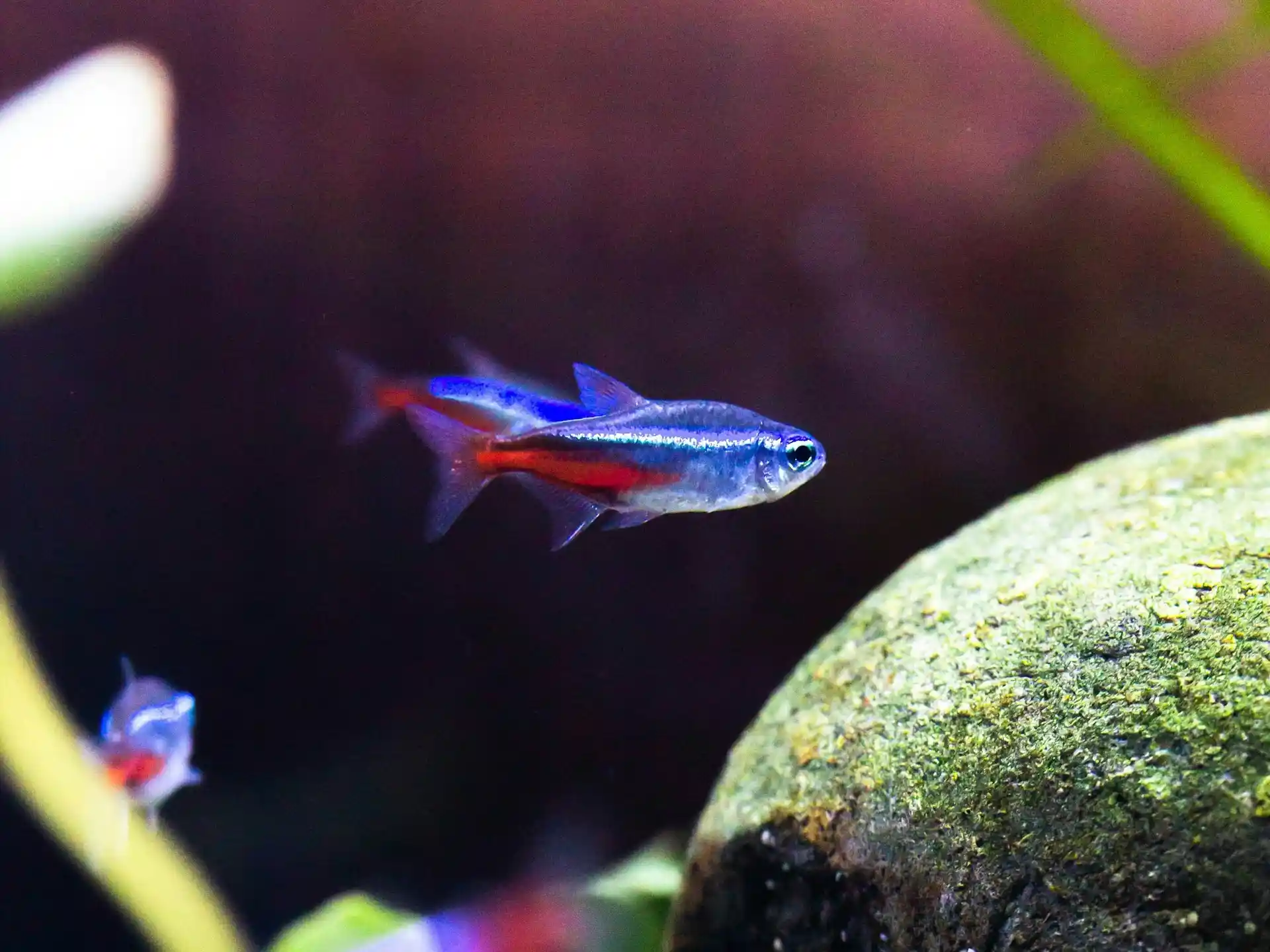
Neon tetras display their best colors against dark substrates and live plants.
Plants and Decoration
Neon tetras thrive in planted tanks. Live plants serve multiple purposes: they provide cover that reduces stress, break sight lines, and help maintain water quality by absorbing nitrates. Good plant choices include Java fern, Amazon sword, Anubias, and Vallisneria. Floating plants like Water Lettuce or Salvinia are particularly effective because they dim the lighting, which neon tetras prefer.
Ideal Tank Setup
- Dark substrate (black sand or dark gravel) to enhance coloration
- Live plants along the back and sides with open swimming space in the center
- Floating plants to diffuse lighting and create shaded areas
- Driftwood and leaf litter for a natural blackwater look (optional but beneficial)
- Gentle filtration — sponge filters or adjustable hang-on-back filters work well
- A secure lid, as neon tetras can jump when startled
Lighting
Neon tetras come from shaded forest streams and prefer subdued lighting. Bright, direct aquarium lights can stress them and fade their colors. If your light is intense, floating plants or dimmer settings will create the conditions they prefer. For planted neon tetra tanks, see our best LED lights for planted tanks guide — moderate, adjustable lighting works best for both the plants and the fish. Their blue stripe is iridescent — created by light reflecting off cells rather than by pigment — so it actually looks more vivid under moderate, angled lighting than under harsh overhead light.
Water Parameters
Stable water conditions matter more than hitting exact numbers. Neon tetras tolerate a range of parameters, but sudden changes in temperature, pH, or hardness cause stress and weaken their immune system.
Temperature
Set your heater to 73-77°F (23-25°C) for the best balance of color, activity, and long-term health. The full tolerance range is 68 to 82°F (20 to 28°C).
- Below 70°F — Too cool for long-term care. Activity drops and immune function weakens.
- 73-77°F — Ideal. Best coloration, active schooling, and strong immunity.
- Above 79°F — Increases metabolism. Extended exposure can shorten lifespan.
Use an adjustable heater with a separate thermometer to verify accuracy — built-in thermostats can drift. Even in warm climates, nighttime drops can stress neon tetras.
pH
Aim for pH 6.0-7.5. Captive-bred neon tetras tolerate a wide range, but stability matters more than hitting a specific number.
- Below 5.0 — Extreme blackwater territory. Wild neon tetras survive here, but unnecessary for captive-bred fish.
- 6.0-7.5 — Ideal for captive-bred stock. No need to adjust your tap water if it falls in this range.
- 7.5-8.0 — Still tolerated well by captive-bred fish, as long as the pH stays stable. Don’t chase lower numbers with chemical buffers.
Avoid sudden pH swings — a stable 7.5 is far safer than a pH that bounces between 6.5 and 7.0 from buffer dosing.
Hardness
Target 5-10 dGH. Neon tetras prefer soft water, but captive-bred stock handles a broader range than wild fish.
- 1-2 dGH — Wild habitat levels. Only needed for breeding setups.
- 5-10 dGH — Ideal for captive-bred neon tetras in a community tank.
- 10-15 dGH — Tolerated, but keep it stable. Avoid mixing hard and soft water sources.
Carbonate hardness (KH) of 1 to 4 dKH helps buffer pH against sudden swings.
Water Change Schedule
Perform 20% water changes weekly to keep nitrates below 20 ppm. Use a water conditioner to neutralize chlorine and chloramine. Match the temperature of new water to the tank water before adding it — a difference of more than 2°F can shock neon tetras.
Filtration
Any standard aquarium filter works — sponge, hang-on-back, canister — as long as the flow isn’t pushing your tetras around. Neon tetras come from slow-moving streams and prefer calmer water, so gentle flow is the main thing to get right.
Aim for 4 to 6 times tank volume turnover per hour. If you notice tetras struggling against the current or avoiding one side of the tank, reduce the flow rate or baffle the output.
Diet and Feeding
Neon tetras are omnivores that eat a wide variety of foods. In the wild, they feed on tiny insects, insect larvae, small crustaceans, algae, and fallen plant matter. A varied diet in captivity keeps them healthy and brings out their best coloration.
What to Feed
Recommended Diet
- High-quality micro pellets or crushed flake food as the daily staple
- Frozen or freeze-dried brine shrimp (Artemia) 2 to 3 times per week
- Frozen or freeze-dried daphnia for digestive health
- Frozen bloodworms as an occasional treat (once or twice a week)
- Micro worms or baby brine shrimp for conditioning or very small tetras
- Blanched vegetables like spinach or zucchini occasionally
How Often to Feed
Feed neon tetras twice per day in small amounts they can finish within 1 to 2 minutes. Their stomachs are roughly the size of their eye, so overfeeding is easy and dangerous. Uneaten food decomposes, spikes ammonia levels, and degrades water quality fast — especially in smaller tanks. If food is settling to the bottom uneaten, you are feeding too much.
Color Enhancement Through Diet
Neon tetras display their brightest colors when fed a varied diet that includes carotenoid-rich foods. Brine shrimp, daphnia, and high-quality color-enhancing pellets all contain natural pigments that intensify the red and blue stripes over time.
Buying Healthy Neon Tetras
The quality of your initial stock matters enormously. Mass-bred neon tetras from large fish farms can be weaker and more disease-prone than selectively bred fish from smaller breeders.
What to Look For
- Bright, vivid coloration with a distinct blue stripe and red tail
- Active swimming in a tight school with other tetras
- Clear eyes with no cloudiness
- Intact fins with no fraying or white edges
- No visible spots, patches, or discoloration on the body
- No dead or sick fish in the same tank at the store
Ask the store how long the fish have been in stock. Neon tetras that have been at the store for at least one to two weeks have already survived the most stressful phase of transport and acclimation. Avoid buying fish that arrived the same day or are still in shipping bags.
Sources
- FishBase — Paracheirodon innesi species profile. Temperature, pH, and hardness reference ranges.
- SeriouslyFish — Paracheirodon innesi care profile. Detailed habitat data and husbandry notes.
- Burkhart, Crow & Keeley — Pocket Guide to the Care and Maintenance of Aquarium Fish. Water parameter recommendations including captive-bred tolerances.
Frequently Asked Questions
How many neon tetras can I keep in a 10-gallon tank?
A 10-gallon tank can comfortably hold 6 neon tetras. You could push it to 8 if the tank is well-filtered and planted, but 6 is the safer number. If you want a larger school of 10 or more, upgrade to a 20-gallon tank where they will display better schooling behavior and more vibrant colors.
How long do neon tetras live?
Neon tetras can live 5 to 8 years in a well-maintained aquarium. Wild specimens may live up to 10 years. In captivity, lifespan depends heavily on water quality, diet variety, stress levels, and whether the fish were healthy when purchased. Many hobbyists report shorter lifespans of 2 to 3 years, often due to poor stock quality or unstable water conditions.
Are neon tetras good for beginners?
Neon tetras are beginner-friendly once the tank is fully cycled and stable. They should never be added to a brand-new aquarium because they are sensitive to ammonia and nitrite spikes. Wait at least 4 to 6 weeks after cycling before adding neon tetras. Once water conditions are stable, they are relatively easy to care for.
Why do my neon tetras keep dying?
The most common causes are poor water quality (ammonia or nitrite above zero), adding them to an uncycled tank, temperature swings, stress from a school that is too small, or neon tetra disease. Test your water parameters, ensure the tank is fully cycled, keep them in groups of at least 6, and quarantine new fish before adding them to an established tank.
Can neon tetras live with bettas?
Neon tetras can coexist with bettas in tanks of 15 gallons or larger with plenty of plants and hiding spots. Neon tetras are fast enough to avoid most betta aggression, and they occupy the middle water column while bettas prefer the surface. However, individual betta temperament varies — some bettas tolerate tank mates while others attack on sight. Always have a backup plan.
Why do neon tetras lose their color at night?
Color fading at night is completely normal. Neon tetras reduce their pigmentation when resting as a natural response to darkness. Their iridescent blue and red stripes will return to full brightness once the lights come back on. If colors remain faded during the day, that can indicate stress, illness, or poor water quality.
Do neon tetras need a heater?
Yes. Neon tetras are tropical fish that tolerate 68 to 82 degrees Fahrenheit, with an ideal range of 73 to 77 degrees. Most homes cannot maintain this range consistently without a heater, especially at night or during colder months. An adjustable aquarium heater set to 75 degrees Fahrenheit is recommended.
What is neon tetra disease and can it be cured?
Neon tetra disease is caused by the parasite Pleistophora hyphessobryconis. Symptoms include color fading, difficulty swimming, a curved spine, and isolation from the school. There is no known cure. Infected fish should be removed immediately to prevent the disease from spreading. Prevention through quarantining new fish and maintaining clean water is the only reliable defense.
Found this helpful?
Share this guide with your fellow aquarium enthusiasts!

Written by
Jonathan Jenkins
I've been keeping fish for over 15 years — everything from planted freshwater tanks to saltwater reefs. I currently have a 30 gallon overstocked guppy breeding tank, 40 gallon planted self-cleaning aquarium, 200 gallon reef tank, and 55 gallon frag tank. I joined Fish Tank World to continue learning while sharing what I've learned along the way.